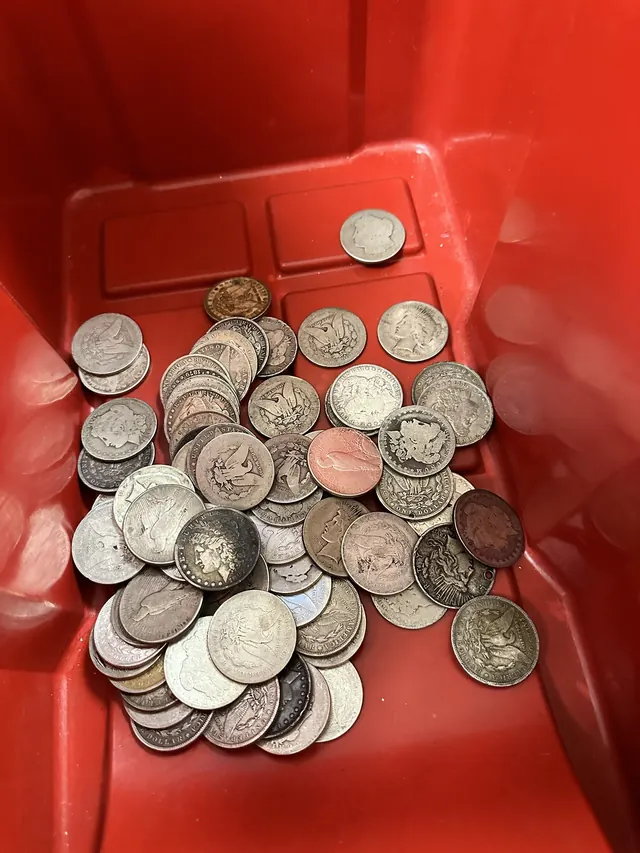
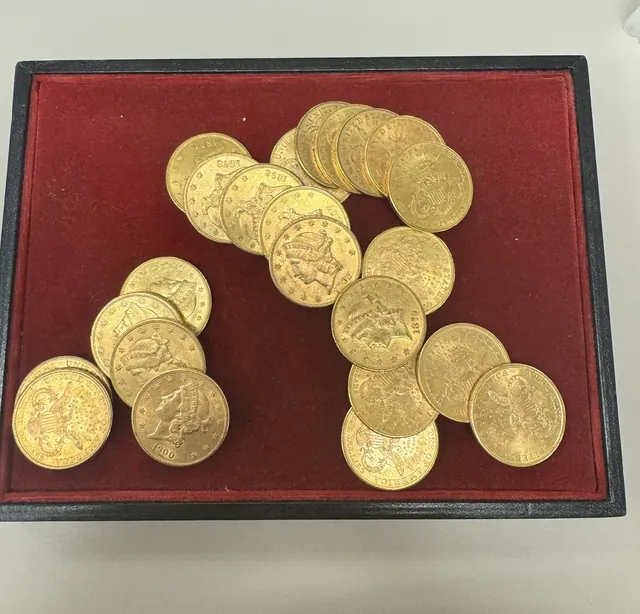
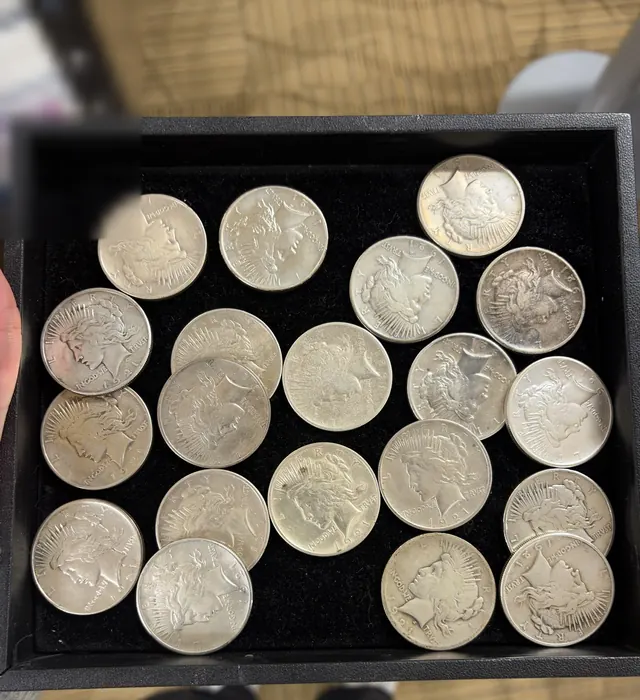
The short answer
Not tax advice. In general: inheriting coins usually isn’t income. Selling them can be taxable if you sell for more than your basis, which is usually the fair market value on the date of death (“stepped-up basis”). Inherited property counts as long-term no matter how soon you sell, and gains on coins are collectibles gains, taxed at a maximum rate of 28%. Write down what was in the collection and what it was worth around the date of death, and talk to a CPA before you sell.
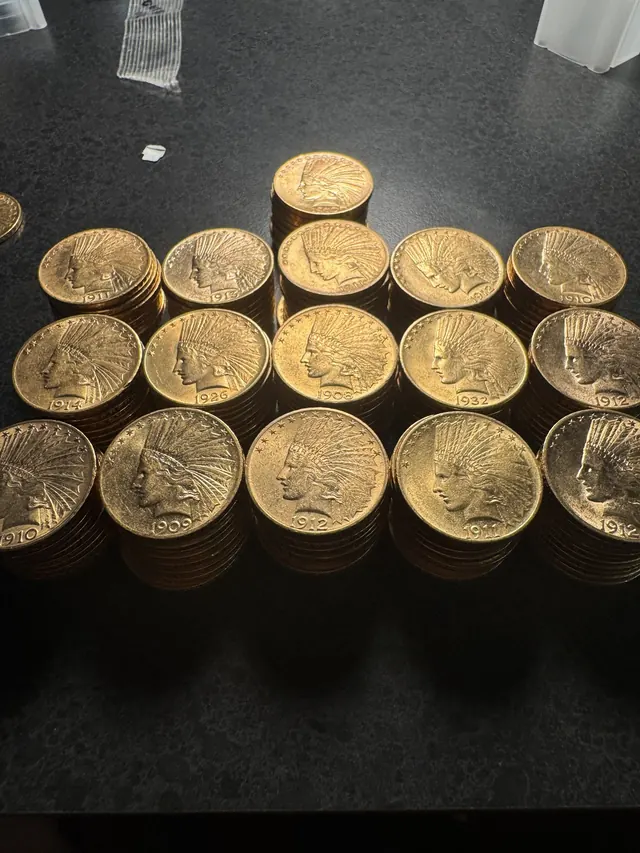
The short version
- Inheriting coins is generally not income. The IRS says that in most cases, property you receive as an inheritance isn’t included in your income.
- Selling them can be taxable. If you sell for more than your basis, you have a taxable gain.
- Your basis is usually the value on the date of death, not what the original owner paid.
- Inherited property counts as long-term, no matter how soon you sell.
- Coins are “collectibles.” Long-term gains on collectibles are taxed at a maximum rate of 28%.
This explains general U.S. federal rules so you know what to ask. Tax rules change, and every estate is different. Before you sell, talk to a CPA or tax professional who knows your situation.
What “stepped-up basis” means
“Basis” is the starting number used to figure your gain or loss when you sell. For something you buy, it’s usually what you paid. Inherited property is different: under Internal Revenue Code §1014, its basis is generally the fair market value on the date of death.
| A simple example (made-up numbers) | Amount |
|---|---|
| What Grandpa paid for a gold coin decades ago | $300 |
| Fair market value on the date he died | $2,000 |
| What you sell it for a few months later | $2,100 |
| Your basis (date-of-death value) | $2,000 |
| Your taxable gain | $100 |
Without the step-up, the gain would have been $1,800. That’s why the date-of-death value matters so much.
A special case. If the estate had to file a federal estate tax return (Form 706), the executor may send you a Schedule A (Form 8971) showing the value reported for what you received, and some beneficiaries must use that value as their basis. Only larger estates file Form 706; the IRS lists a filing threshold of $15,000,000 for people who die in 2026. The executor can tell you whether one was filed.
Inherited coins count as long-term
Normally you must own something for more than a year for a gain to be long-term. Inherited property skips that rule. IRS Publication 544 says that if you inherit property, you’re considered to have held it longer than one year, regardless of how long you actually held it. So even if you sell the month after you receive the coins, the gain is treated as long-term.
The collectibles rate: up to 28%
Coins are treated differently from stocks. IRS Topic 409 says net capital gains from selling collectibles, such as coins or art, are taxed at a maximum 28% rate, and Publication 550 includes gold, silver, and platinum bullion as collectibles.
- 28% is a ceiling, not a flat rate. Your actual rate depends on your income.
- It applies only to the gain. With stepped-up basis, the gain can be small if values haven’t changed much since the date of death.
- Other taxes may apply, such as the net investment income tax for some people. Your CPA will work it out.
If you sell for less than the date-of-death value, whether you can deduct the loss depends on the facts. Ask your CPA.
Documenting the date-of-death value
This is the single most useful thing you can do for your taxes.
- Make an inventory. List each coin or group with its date, mint, and condition notes. Photograph everything.
- Record values around the date of death. For bullion and common silver, write down the spot price on that date and the melt value. For collector coins, save price-guide pages or comparable sales from that time.
- Get a written appraisal for anything valuable. A dated, written appraisal from a qualified, independent professional is strong support for your basis.
- Ask the executor for the date-of-death value of what you received.
- Keep the paperwork. Old receipts don’t set your basis, but they help tell the story of the collection.
Will the dealer report my sale to the IRS?
Sometimes, but only for certain bullion items in certain quantities. The IRS instructions for Form 1099-B tie reporting to forms and quantities of metal approved for regulated futures contracts, with a customer’s sales within 24 hours added together. The instructions don’t name specific coins. In practice, dealers follow industry guidelines like these, published by the bullion dealer APMEX and credited to the Industry Council for Tangible Assets (ICTA):
| Item | Reported when you sell at least |
|---|---|
| Gold bars (.995 fine or better) | 1 kilo total (32.15 troy oz) |
| Silver bars (.999 fine or better) | 1,000 troy oz total |
| Platinum bars | 25 troy oz total |
| Palladium bars | 100 troy oz total |
| 1 oz gold Krugerrands, Maple Leafs, or Mexican Onzas | 25 coins |
| U.S. 90% silver dimes, quarters, and half dollars | $1,000 face value total |
Industry guideline, not an IRS list. Guidelines can change.
Most collector coins, including Morgan and Peace dollars and most older U.S. gold coins, aren’t on this list. But no 1099-B doesn’t mean no tax. If you have a filing requirement, you report the sale on Form 8949 and/or Schedule D.
State taxes
States have their own rules. Some tax capital gains as income, some have estate or inheritance taxes, and sales tax rules for coins and bullion vary. Check with your state’s department of revenue or your CPA.
What to bring to your CPA
- Your inventory with photos
- Date-of-death values and how you got them (appraisal, price guides, melt calculations)
- Any Schedule A (Form 8971) from the executor
- Written offers you received, and the final sale receipts
- Any Form 1099-B a dealer gave you
What to do next
The Inherited Coin Collection Kit includes an inventory workbook built for this: a melt calculator, an automatic summary, and an Offer Comparison tab, so you can hand your CPA one clean file. The guide also lists the tax questions to take to your CPA, including stepped-up basis.
Questions
Are inherited gold coins taxable?
Inheriting them generally isn’t taxable income. Selling them can be. Your gain is generally the sale price minus the date-of-death value, and gains on coins are collectibles gains, taxed at a maximum of 28%.
Do I have to hold inherited coins for a year to get long-term treatment?
No. The IRS treats inherited property as held for more than one year, regardless of when you sell.
What if I don’t know what the coins were worth when my relative died?
Ask the executor first. If there’s no value on record, a qualified appraiser can often estimate the value as of the date of death using prices from that time. Ask your CPA how to document it.
Will a coin dealer send a 1099-B to the IRS?
Only for certain bullion items in certain quantities, such as 25 or more one-ounce Krugerrands under common industry guidelines. Most collector coins don’t trigger one, but you still report any taxable gain.
Sources
- IRS Topic No. 409, Capital Gains and Losses
- IRS Publication 551, Basis of Assets
- 26 U.S. Code §1014 (Cornell LII)
- IRS Publication 544, Sales and Other Dispositions of Assets
- IRS Publication 550, Investment Income and Expenses
- IRS Publication 525, Taxable and Nontaxable Income
- IRS FAQ: Gifts & Inheritances
- IRS Estate Tax
- IRS Instructions for Form 1099-B
- APMEX: Tax Information on Gold & Silver Buying
Educational only. This isn’t an appraisal, a price guarantee, an offer to buy or sell, or legal or tax advice. Coin values change daily. The views are the author’s own.